
A Portrait of Paradise: When Fiction Becomes the Mirror of Power
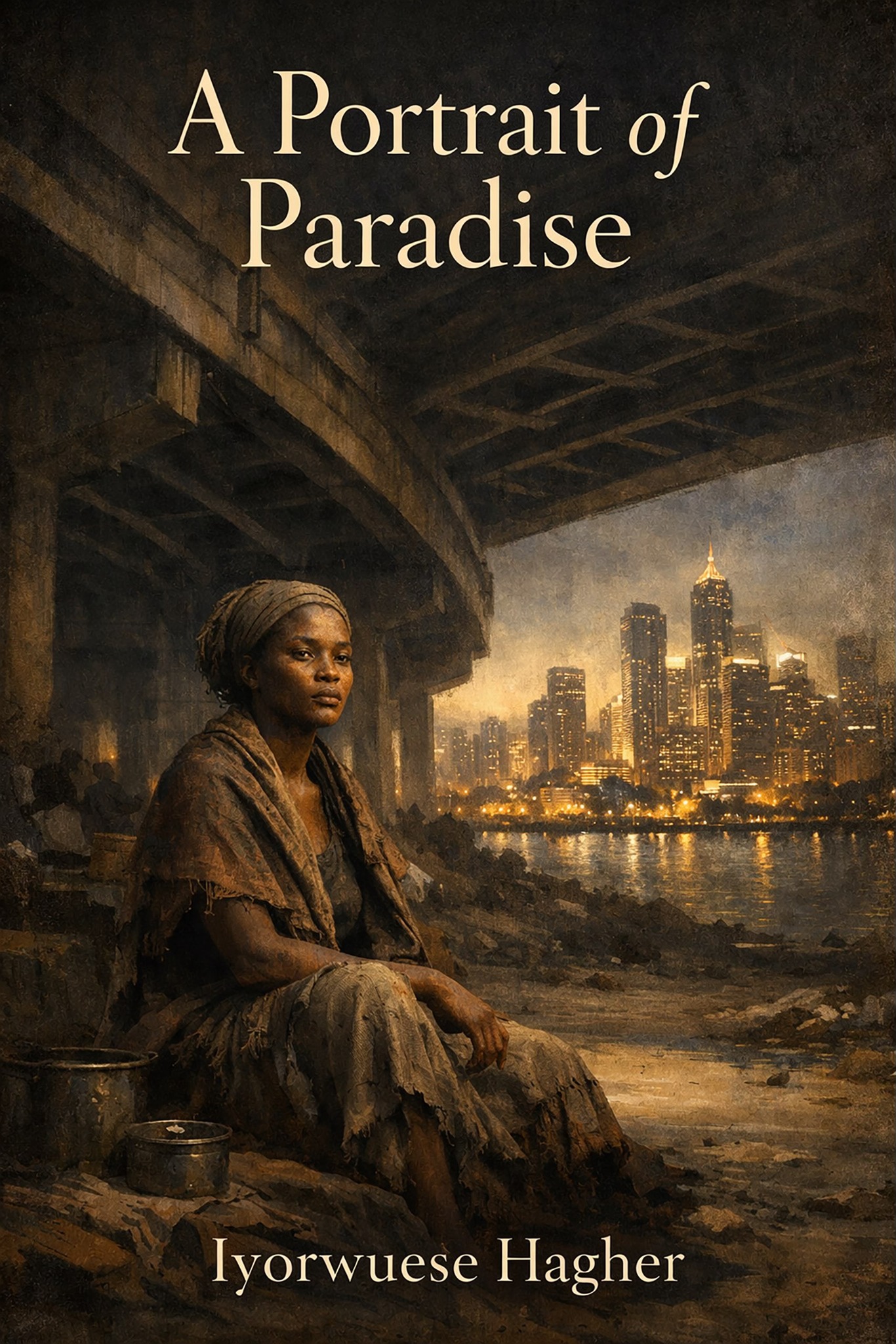
Today marks more than the publication of a book. It marks the crossing of memory, conscience, and history into the global literary arena. My new novel, A Portrait of Paradise, is officially published in the United States by J Merrill Publishing Inc, a milestone that carries symbolic meaning far beyond literary ceremony. The book appears in print as a 282-page political novel released on April 21, 2026, introducing readers worldwide to the fictional nation of Sofalia and the turbulent moral universe it inhabits. (Amazon)
NATIONHOODGENERAL
Iyorwuese Hagher
4/22/20266 min read
Today, a Story Crosses the Atlantic
Today marks more than the publication of a book.
It marks the crossing of memory, conscience, and history into the global literary arena.
My new novel, A Portrait of Paradise, is officially published in the United States by J Merrill Publishing Inc, a milestone that carries symbolic meaning far beyond literary ceremony. The book appears in print as a 282-page political novel released on April 21, 2026, introducing readers worldwide to the fictional nation of Sofalia and the turbulent moral universe it inhabits.
Get your copy of A Portrait of Paradise now on Amazon and step into a story where fiction meets the reality of power. Amazon)
A book released into the world is like a message cast into the ocean. It travels without passport, without visa, yet it crosses borders of geography and imagination. It seeks readers not merely to entertain them—but to trouble their conscience.
This is not merely fiction.
It is testimony clothed in metaphor.
The Novel as Witness
Every nation has moments it wishes to forget.
Yet literature exists precisely to remember.
A Portrait of Paradise tells the story of power, ambition, betrayal, and downfall in a fictional West African country where paradise is carefully staged—but rot lies beneath its surface. The narrative examines how elites manipulate power and construct illusions of prosperity while ordinary citizens endure systemic suffering. (Leadership)
The fictional state of Sofalia may not exist on any political map, yet its shadows resemble realities recognizable across continents. Its leaders build towers of wealth while foundations of justice weaken. Its rulers speak of unity while dividing the people.
In this sense, the novel does not invent reality.
It reveals it.
Fiction becomes witness where history hesitates to speak.
Get your copy of A Portrait of Paradise now on Amazon and step into a story where fiction meets the reality of power. Amazon)
Paradise Built on Sand
The title itself—A Portrait of Paradise—is intentionally paradoxical.
What is paradise?
Is it wealth?
Is it power?
Is it stability built upon silence?
Or is paradise something more fragile—justice, dignity, shared humanity?
In Sofalia, paradise is manufactured. It is curated by the privileged classes—the wealthy “Ogas”—whose luxury exists side by side with hardship endured by the common people. Behind the polished façade lies a dystopian reality where violence, corruption, and moral compromise become normalized tools of governance.
The novel interrogates the central contradiction of modern politics:
Can prosperity exist without justice?
History suggests that it cannot.
And literature, when honest, confirms it.
Why Political Fiction Matters Now
There was a time when fiction entertained.
Today, fiction interrogates.
Political fiction is not merely storytelling—it is a form of civic engagement. It asks questions that speeches avoid. It dramatizes consequences that policy papers conceal. It transforms statistics into human experience.
Recent commentary on the novel notes how it demonstrates the manipulation of power by ruling elites, revealing how authority can become an instrument of domination rather than service. (Leadership)
That observation is not accidental. It is deliberate.
For those who have lived inside systems of governance—who have watched institutions bend under pressure—the act of writing fiction becomes an act of memory preservation. It ensures that the truth survives even when official records fade.
Political fiction, therefore, becomes history written in advance.
Get your copy of A Portrait of Paradise now on Amazon and step into a story where fiction meets the reality of power. Amazon)
From Office to Imagination
Readers often ask why a public servant turns to fiction.
The answer is simple:
Because some truths cannot be spoken directly.
They must be staged.
They must be dramatized.
They must be embodied in characters whose struggles echo the silent battles of real societies.
Experience shapes imagination. Years spent observing diplomacy, legislation, governance, and crisis leave residues of insight. Those residues become narrative material.
Fiction offers a unique freedom—the freedom to tell the truth without naming names.
And in that freedom lies power.
Get your copy of A Portrait of Paradise now on Amazon and step into a story where fiction meets the reality of power. Amazon)
Sofalia as Symbol
Sofalia is not Nigeria.
Sofalia is not any single country.
Yet Sofalia is every nation where power exceeds accountability.
It is every place where leadership becomes theatre rather than service. It is every society where the language of democracy masks the mechanics of control.
The fictional nation allows readers to confront uncomfortable realities without defensiveness. By distancing the story from geography, the novel invites reflection rather than denial.
Readers are not asked:
“Is this about us?”
Instead, they begin to wonder:
“Could this become us?”
And that question is where transformation begins.
The Architecture of Power
One of the central concerns of A Portrait of Paradise is the structure of power itself.
Power is rarely sudden.
It accumulates gradually.
It begins with ambition.
It matures into authority.
It hardens into control.
Eventually, it forgets its purpose.
The novel examines how leaders ascend to influence through charisma and strategy, yet fall through arrogance and moral compromise. It portrays the trajectory of authority—from promise to corruption to collapse.
This arc is not unique to fiction.
History repeats it with alarming consistency.
Empires rise.
Systems consolidate.
Institutions weaken.
Collapse follows.
The novel simply dramatizes what history repeatedly confirms.
The Moral Geography of Leadership
Leadership is not merely political—it is moral.
The crisis of leadership in many societies is not lack of intelligence or ambition. It is lack of ethical restraint. It is the abandonment of conscience in pursuit of permanence.
In Sofalia, leaders do not fall because enemies defeat them. They fall because integrity deserts them.
The tragedy is internal before it becomes external.
And that is the lesson literature seeks to preserve:
Power without character is temporary.
Get your copy of A Portrait of Paradise now on Amazon and step into a story where fiction meets the reality of power. Amazon)
Why the World Needs African Political Fiction
African literature has long served as a mirror to political reality. From the earliest independence-era narratives to contemporary dystopian storytelling, African writers have documented the moral dilemmas of governance and nation-building.
The global publication of A Portrait of Paradise by J Merrill Publishing Inc signals a widening recognition of African political narratives as part of world literature—not peripheral voices, but central ones. (Instagram)
African stories are no longer regional artifacts. They are global reflections.
They speak not only to Africa, but to humanity.
Because corruption is universal.
Power is universal.
Hope is universal.
The Discipline of Writing as Nation-Building
Writing a novel of this magnitude is not a spontaneous act. It is disciplined labor—years of reflection, observation, revision, and moral wrestling.
The novel becomes a laboratory where ideas are tested and consequences imagined.
It becomes a classroom without walls.
And ultimately, it becomes a civic instrument—one that challenges complacency and invites reform.
Literature does not legislate laws.
But it shapes consciousness.
And consciousness shapes history.
Publication as Arrival—and Beginning
The publication of A Portrait of Paradise today in the United States represents arrival into a global readership. Yet publication is not an ending—it is a beginning.
Once a book leaves the writer’s desk, it becomes the reader’s companion. It travels into classrooms, libraries, living rooms, and conversations.
It provokes dialogue.
It sparks debate.
It awakens memory.
And perhaps, in its quietest moments, it inspires courage.
The Responsibility of the Reader
Every reader who opens A Portrait of Paradise becomes a participant in its journey.
The reader is asked not merely to follow characters, but to examine systems. Not merely to observe injustice, but to question its origins.
Literature is not passive consumption.
It is moral engagement.
Readers carry the responsibility to reflect, to discuss, and to imagine alternatives.
Because the future of nations is shaped not only by leaders—but by citizens who refuse silence.
A Portrait Still Being Painted
No novel completes a nation’s story.
It only sketches a moment.
A Portrait of Paradise is not the final word on governance, power, or justice. It is one brushstroke in a larger canvas of African political literature.
Yet every brushstroke matters.
Each one deepens understanding.
Each one sharpens awareness.
Each one moves society closer to truth.
And truth—however uncomfortable—is the foundation of progress.
Get your copy of A Portrait of Paradise now on Amazon and step into a story where fiction meets the reality of power. Amazon)
Closing Reflection: Paradise Reimagined
The deepest question the novel poses is simple:
What kind of paradise do we seek?
One built on wealth and fear?
Or one sustained by justice and dignity?
History shows that false paradises collapse.
True ones endure.
As A Portrait of Paradise enters the world today, it does so not merely as a novel—but as an invitation.
An invitation to reflect.
An invitation to remember.
An invitation to imagine nations that choose conscience over convenience.
And perhaps, in that imagining, to begin the long work of building a paradise that is real.