
Failure as a Private University
There is a kind of education that no formal institution can give. It has no lecture theatre, no convocation ground, no registrar, no library catalogue, and no printed certificate.
LIFEGENERAL
Iyorwuese Hagher
5/16/20267 min read
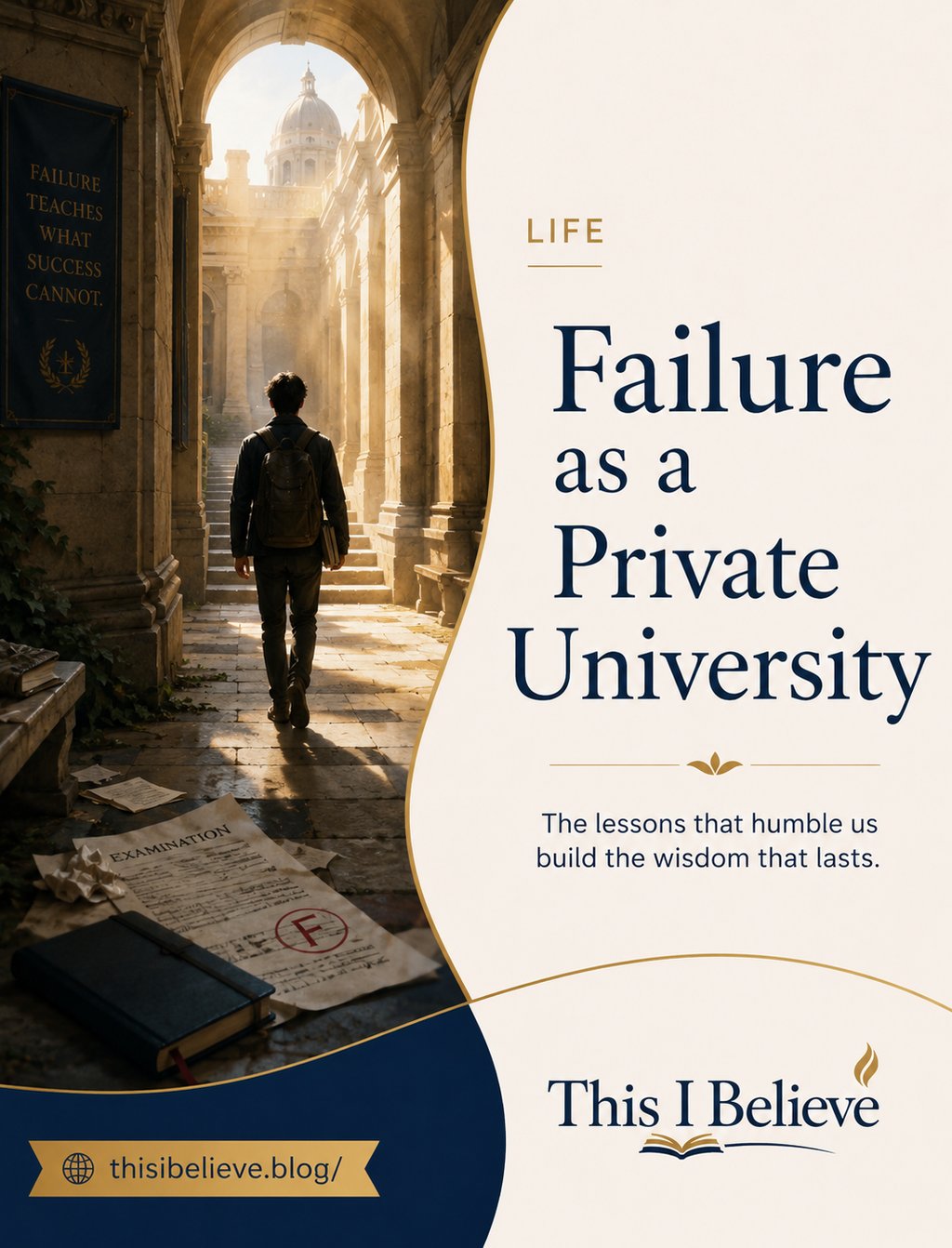
There is a kind of education that no formal institution can give. It has no lecture theatre, no convocation ground, no registrar, no library catalogue, and no printed certificate. Yet its lessons are among the most unforgettable lessons a human being can receive. It is the education that comes through failure.
Failure is a private university.
Each person is admitted into it at some point in life, whether he desires admission or not. Some enter it early. Some enter it late. Some enter it through business collapse, political defeat, academic disappointment, betrayal, sickness, public humiliation, broken relationships, family crisis, poverty, or personal mistakes. Its curriculum is severe. Its examinations are painful. Its tuition is paid in tears, shame, sleepless nights, loneliness, and hard reflection.
But for those who are humble enough to learn, failure becomes one of life’s greatest teachers.
The tragedy is not that people fail. The tragedy is that many people fail and learn nothing. They blame everyone except themselves. They curse the season but do not study the lesson. They repeat the same errors with new confidence. They carry pain, but not wisdom. They survive the storm, but return to the same arrogance that invited the storm.
Failure was meant to educate them, but they only allowed it to wound them.
This is why the meaning of failure must be properly understood. Failure is not always final. It is not always disgrace. It is not always proof that a person is useless, cursed, abandoned, or incapable. Often, failure is life’s interruption of our illusions. It is the sudden collapse of false confidence. It is the removal of the mask. It is reality standing before ambition and saying, “You must grow deeper before you go higher.”
In youth, many people fear failure because they think it is the opposite of success. But age and experience teach us that failure is often part of the hidden architecture of success. Success that has never been tested by failure may become proud, shallow, and careless. But success that has passed through failure usually carries discipline, gratitude, and wisdom.
A man who has never fallen may not know the value of balance.
A woman who has never lost may not understand the discipline of rebuilding.
A leader who has never been rejected may not understand humility.
A writer who has never been misunderstood may not understand the loneliness of truth.
A nation that refuses to learn from its failures will continue to manufacture them.
This is why failure must not be wasted.
The first lesson failure teaches is humility. Nothing humbles a person like discovering that intelligence is not enough, enthusiasm is not enough, connections are not enough, beauty is not enough, and even hard work, though necessary, is not always immediately rewarded. Life is more complicated than our plans. There are doors that effort will not open at the time we desire. There are ambitions that collapse not because they were evil, but because they were premature. There are battles we lose because we were unprepared, impatient, proud, or surrounded by the wrong people.
Humility begins when a person can say, “I was wrong,” without feeling destroyed.
Many people never recover from failure because they are too proud to examine their own contribution to it. They want sympathy, but not correction. They want another chance, but not a new attitude. They want God to restore what they lost, but they do not want God to discipline what caused the loss.
Failure, when properly received, brings a person to the mirror.
It asks difficult questions.
Did I prepare well enough?
Did I listen to wise counsel?
Was I moved by purpose or by vanity?
Did I confuse ambition with calling?
Did I trust the wrong people?
Did I ignore warning signs?
Did I build on character or merely on opportunity?
These questions may be painful, but they are necessary. A person who cannot interrogate failure cannot graduate from it.
The second lesson failure teaches is patience. In a world obsessed with speed, failure slows us down. It forces us to sit with ourselves. It interrupts the false urgency that makes people chase everything without understanding anything. Failure says, “Wait. Think. Rebuild. Mature.”
Many people want instant success because they see only the harvest of others, not the hidden years of planting. Social media has worsened this illusion. It displays the wedding but not the tears. It displays the new car but not the debt. It displays the promotion but not the years of discipline. It displays applause but not sacrifice.
The loud world teaches comparison. Failure teaches examination.
When failure enters a person’s life, it often removes him from the crowd. Suddenly the phone becomes quiet. The applause disappears. Those who once gathered around opportunity begin to disappear with it. In that silence, the person begins to know who truly loves him, who merely benefited from him, and who was only waiting for his fall.
Failure is painful, but it is also revealing.
It reveals friends. It reveals motives. It reveals character. It reveals the strength of one’s faith. It reveals whether one’s identity was built on substance or public approval.
This is why failure, though private, is a powerful university. It teaches what applause cannot teach. It teaches what success often hides. It teaches the difference between reputation and character. Reputation is what people think you are when things are going well. Character is what remains when things fall apart.
In the school of failure, character is the main course.
A person may lose money and still be rich in character. He may lose an election and still retain honour. He may lose a position and still keep dignity. He may lose a relationship and still preserve his soul. But if, in the hour of failure, he becomes bitter, dishonest, vengeful, cruel, and morally careless, then he has lost more than the thing that failed. He has lost himself.
To fail is human. To become wicked because one failed is dangerous.
The third lesson failure teaches is discernment. After failure, one begins to see more clearly. Certain ambitions lose their glamour. Certain relationships lose their disguise. Certain habits reveal their cost. Certain patterns become obvious. The person begins to understand that not every open door is divine, not every supporter is loyal, not every opportunity is healthy, and not every success is worth the price.
Discernment is one of the gifts hidden inside pain.
A person who has failed and reflected deeply becomes more careful with promises, more attentive to details, more patient with process, and more respectful of wisdom. He no longer rushes into things because they look attractive. He asks deeper questions. He studies foundations. He examines people’s motives. He learns that enthusiasm must be guided by prudence.
Failure can sharpen the eyes.
But this only happens when the heart does not become poisoned.
There are people who emerge from failure wiser. There are others who emerge from it cynical. The wise person says, “What must I learn?” The cynical person says, “Nothing works.” The wise person rebuilds with humility. The cynical person sits in permanent complaint. The wise person becomes more compassionate toward others who struggle. The cynical person becomes angry at anyone who succeeds.
Failure must not be allowed to turn the soul against life.
This is especially important in our society, where failure is often treated with cruelty. We mock those who tried and did not succeed. We laugh at collapsed businesses. We celebrate political defeat as if defeat cancels humanity. We shame students who do not pass. We ridicule marriages that break. We look at a man’s difficult season and quickly call him finished.
But no society becomes great by humiliating those who fall.
A mature society understands that failure is part of innovation, growth, creativity, leadership, and nation-building. Every serious inventor has known failure. Every honest reformer has faced setbacks. Every great writer has endured rejection. Every true leader has passed through misunderstanding. Every entrepreneur knows that risk carries the possibility of loss.
A society that stigmatizes failure will produce timid citizens.
People will no longer attempt bold things. They will hide their dreams. They will prefer safe mediocrity to meaningful risk. They will fear public laughter more than private regret. And when citizens fear failure too much, the nation itself becomes small in imagination.
Nigeria needs people who are not afraid to try again.
We need young people who understand that one failed business does not mean the end of enterprise. One failed examination does not mean the end of intelligence. One failed relationship does not mean the end of love. One failed election does not mean the end of public service. One failed plan does not mean the end of destiny.
Life is larger than one chapter.
But trying again must not mean repeating foolishness. There is a difference between resilience and stubborn ignorance. Resilience learns and rises. Stubbornness falls, refuses correction, and calls it faith. Faith is not the refusal to think. Courage is not the refusal to adjust. Persistence is not the repetition of a failed method without reflection.
The wise person does not merely rise after failure. He rises differently.
He rises with better questions.
He rises with cleaner motives.
He rises with stronger discipline.
He rises with fewer illusions.
He rises with deeper prayer and wiser counsel.
He rises having discovered that failure did not come to destroy him, but to refine him.
There is also a spiritual dimension to failure. Sometimes God allows a person to fail in order to save him from a greater disaster. Some successes would have destroyed us if they had arrived too early. Some offices would have corrupted us if we had entered them unprepared. Some relationships would have enslaved us if they had continued. Some opportunities would have enlarged our pride and diminished our soul.
What we call loss may sometimes be mercy wearing a painful garment.
This is difficult to accept when the wound is fresh. But time often reveals what pain could not explain. Many people look back and thank God for doors that did not open. They remember the disappointment that redirected them, the rejection that protected them, the collapse that awakened them, and the delay that matured them.
Failure is not always punishment. Sometimes it is redirection.
The question is not whether we will fail. Every human being will fail in something. The question is what failure will produce in us. Will it produce bitterness or wisdom? Shame or strength? Envy or discipline? Complaint or clarity? Despair or renewal?
No university can educate a person who refuses to learn. Failure is the same. It offers lessons, but it does not force wisdom upon anyone. The proud will leave failure angrier. The humble will leave it deeper.
At the end of the day, failure is not the opposite of a meaningful life. A wasted life is one that refuses to learn. A meaningful life is not a life without mistakes, but a life in which even mistakes are converted into instruction.
So when failure comes, as it comes to all, do not only cry. Study.
Do not only explain. Reflect.
Do not only blame. Examine.
Do not only retreat. Rebuild.
Do not only remember the pain. Recover the lesson.
For failure, rightly understood, is a private university. Its classrooms are hidden. Its lectures are hard. Its examinations are severe. But its graduates often become wiser, humbler, stronger, and more useful to the world.
And perhaps this is one of life’s great mercies: that even what broke us can teach us how to become whole.